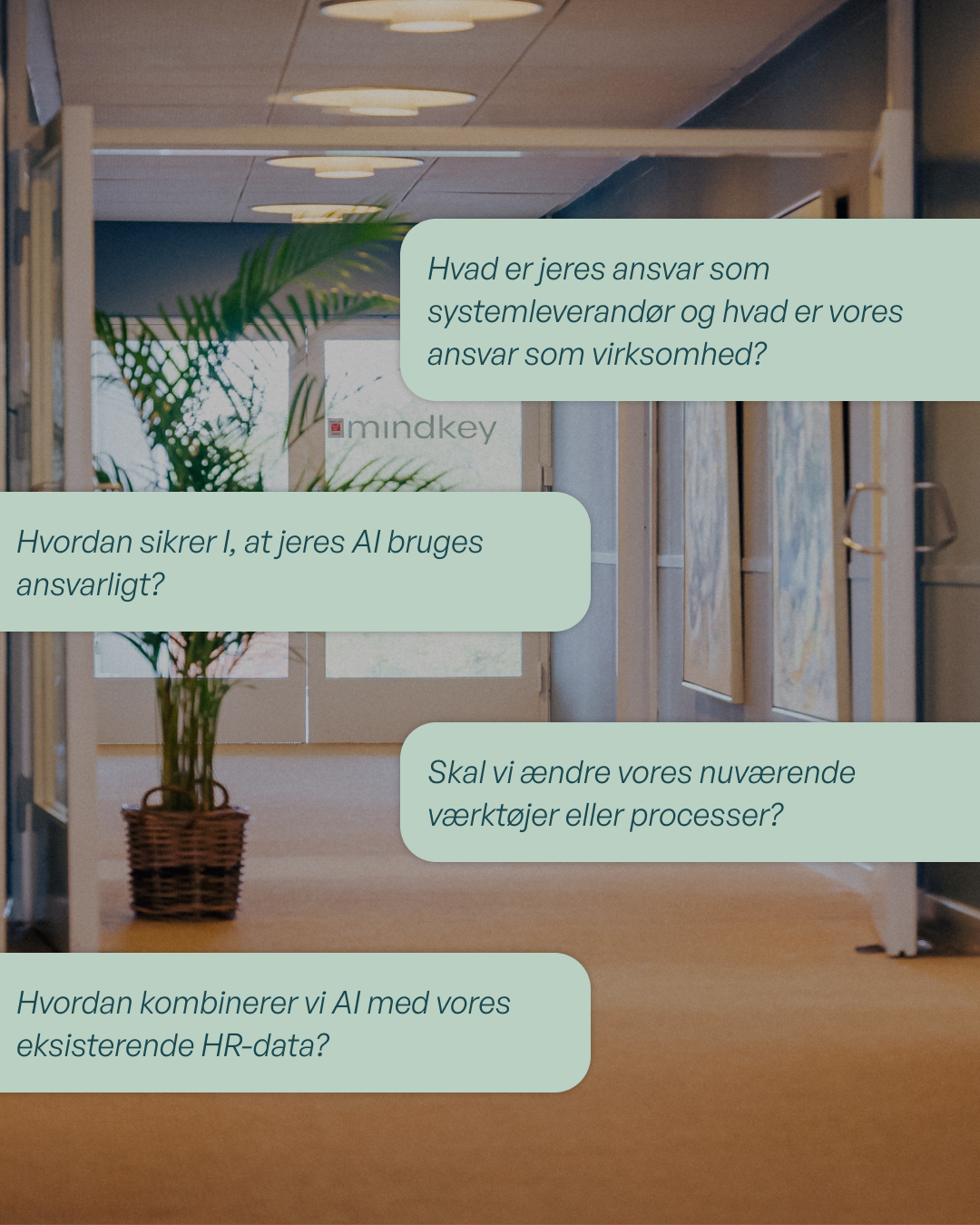
AI is becoming a natural part of HR — from recruitment and skills development to working with salary transparency.
But with the new possibilities also comes an important question:
How do we use AI responsibly?
With the EU's upcoming AI regulation, it is no longer something you choose to deal with yourself - it will become a requirement.
What is the EU AI Regulation?
The EU's AI Regulation is an attempt to create a clear framework for how AI is developed and used in Europe.
The aim is not to limit innovation - but to ensure that AI is used:
- probably
- Transparent
- And with respect for fundamental rights
This means, in practice, that companies should not only focus on, what AI can do - but also how it is used.
What does this mean for HR?
For HR, this means one thing:
AI becomes part of your responsibility.
This applies, for example, when AI is used to:
- Screening of candidates
- Analysis of employee data
- Structuring jobs and salaries
- Decision support in HR processes
Here AI can affect people directly and therefore many HR applications fall into the category high risk.
It makes requirements for:
- Documentation
- opacity
- And human control
Who's in charge?
The AI regulation distinguishes several roles:
- Providers (those who develop AI systems)
- Users (companies using AI in practice)
As a company, you are responsible for:
- How AI is used
- What decisions it supports
- And how do you document it
But it also means that choosing a vendor, such as Mindkey, becomes crucial.
AI isn't just about technology - it's about structure
An important point that is often overlooked:
AI is only as good as the foundation on which it is built.
If your HR data and structure are unclear, so will the results.
This is especially true in work with salary transparency, where AI can help with:
- Analyzing salary data
- Identify deviations
- And create an overview of e.g. job types/sub job types
But only if:
- Roles are defined
- Salary is structured
- And the data is consistent
How to get started (without making it complex)
The AI regulation may seem comprehensive - but the work can start simply.
Here are 4 good places to start:
1. Get an overview of your use of AI
Where do you use AI today and for what?
2. Assess the risk
Does AI have an impact on humans? (e.g. recruitment or salary)
3. Ensure transparency
Can you explain how AI arrives at its proposals?
4. Maintain human control
AI must support decisions - not make them alone
AI in HR: From hype to responsible practice
AI can create great value in HR:
- Faster analysis
- Better decision-making basis
- More structure and overview
But only if used correctly. It's not about using the most AI - it's about using it responsibly.
Mindkey's approach
At Mindkey, we work with AI as a tool for decision support and not as a substitute for HR.
It means:
- AI proposes - HR assesses
- AI analyzes - HR decides
- AI creates overview - HR creates direction
At the same time, the solution is built to support:
- opacity
- Documentation
- And a structured approach to HR data
Ready for the next step?
The earlier you get to grips with the structure, data and use of AI, the easier it will be to meet the requirements.
And most importantly:
You get more value out of your HR work.
Want to know how we work with AI in practice?
You are always welcome to reach out or participate in our networking meeting in Copenhagen on May 20, where we will focus on the topic with presentations and opportunities for sparring with other HR profiles.