You know the rules by heart. Getting the overview is another matter.
Most HR professionals know the rules by heart by now: 2.08 vacation days per month, 25 days per year, and the option to carry over the 5th vacation week if a written agreement is in place. That is not where things go wrong.
What many forget in practice is that it is actually the company—not the employee—that determines when vacation is to be taken, within the legal framework for notice (3 months for main vacation, 1 month for remaining vacation). Once vacation has been agreed upon or notified, it is generally set in stone. And if an employee is truly prevented from taking vacation, for example due to illness or maternity leave, special rules apply that may mean up to 4 weeks of vacation are carried over automatically—not just the voluntary carry-over of the 5th vacation week, which requires an agreement.
Where it gets difficult is in practice—when 40, 200, or 2,000 employees all need their balances updated, their requests approved, and their absences recorded correctly, all while HR is also trying to get everything else on their list done.
This is exactly where a system like Mindkey makes a difference—not by changing the rules, but by removing the manual work that otherwise exists between the rules and everyday life.
From rule to real-time: the vacation balance
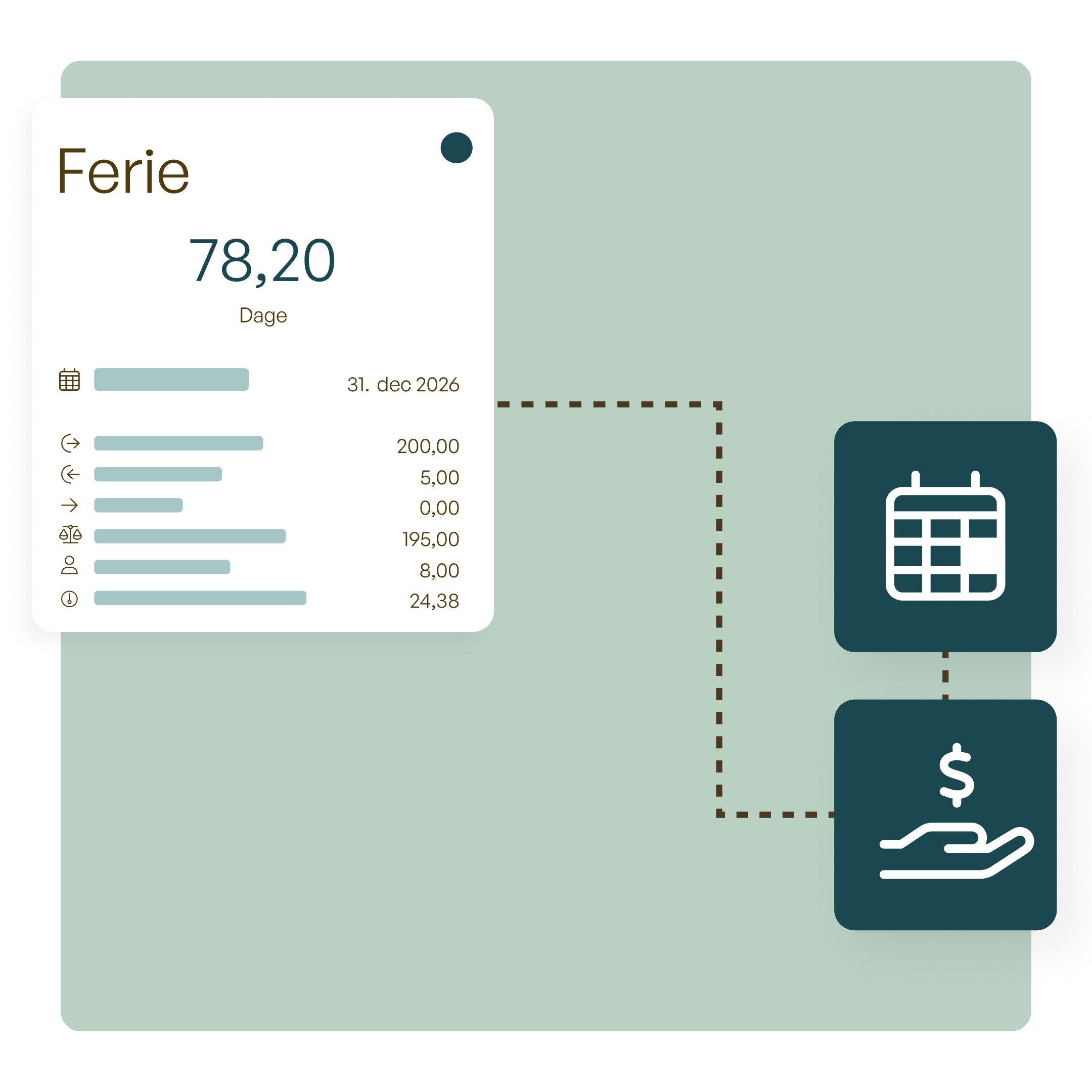
Instead of someone having to calculate backwards in a spreadsheet, Mindkey’s vacation and absence module shows the balance as it looks right now—for both the current and previous vacation year. Employees can see exactly how many days are left without having to ask HR or look for an old payslip.
The same applies to extra vacation days and other types of absence: the balance is updated continuously as days are earned, requested, and approved—not just when someone manually enters it afterwards.
Goodbye to the email from last Tuesday
Vacation requests sent via email tend to get buried—especially in the weeks when most employees are applying at the same time. In Mindkey, this happens directly in the system: the employee requests, the manager approves with a few clicks, and both parties can see the status along the way—what is upcoming, and what is still awaiting a response.
It sounds like a small detail, but this is often where the real time savings lie. No one has to remember to follow up on an email from last Tuesday.
The overview that shifts from the individual to the entire organization
For HR, vacation planning is rarely just about one person at a time. It is about being able to see across the board: Who has many days left that need to be scheduled before the end of the year? Which teams are at risk of being understaffed in week 42? Are there carry-over agreements that need to be finalized before December 31st—and are there employees for whom a vacation impediment means the carry-over rules are different than usual?
Mindkey’s system gathers that kind of information in one place, so HR doesn’t have to piece the overview together from multiple sources—and can act on it in good time, instead of discovering it at the last minute.
Vacation is the easy part. Sick leave is what requires a trained eye
Vacation is only part of the picture. The module also tracks other types of absence, such as personal illness, where the system can display trends over the past 12 months. This gives HR an early warning if patterns change, without requiring a manual review of sickness absence statistics.
This also applies to more specific situations that are easily forgotten: If an employee falls ill before their vacation even begins, they are not obligated to take it—it can be rescheduled. If the employee falls ill during their vacation, they may be entitled to replacement vacation days under certain conditions, though not for the first 5 days of illness in the vacation year, and only with a medical certificate. These are the types of exceptions that are easy to overlook when handled manually, but simple to manage when the rule is programmed into the system once and applied consistently every time.
Vacation isn't just time off—it's also salary that needs to be calculated correctly
Behind every single vacation day lies a payroll question, and it isn't the same for everyone. Salaried employees typically take vacation with pay plus a 1 percent vacation supplement, while hourly workers instead accrue 12.5 percent in vacation pay, which is paid out when the vacation is taken. Some employees may even choose vacation pay instead of paid vacation—but then a different rate applies, and it must be reported to the company before the start of the vacation year.
The same applies when an employee resigns. Vacation that has already been scheduled or agreed upon must generally still be taken during the notice period—but only if the notice period is long enough. And when the vacation period finally expires on December 31st, unused vacation days beyond 4 weeks must be paid out automatically, without anyone needing to reach an agreement.
These are exactly the kinds of rules that are easy to get wrong manually—and which a system like Mindkey ensures are handled consistently every time, whether it's for the 10th employee or the 1,000th.
Less cleanup, more time for what actually requires a human
None of this is about making vacation planning more complicated. On the contrary. When balances, applications, approvals, and absence data are centralized and updated automatically, a large portion of the administrative work that otherwise lands on HR's desk every summer and every December disappears.
What remains is more time for what the system cannot solve for you—the dialogue with employees and ensuring that vacation is actually taken, not just registered.
With Mindkey's vacation and absence module both employees and HR get one place to go for a complete overview, all the way from application to approval and reporting.